
What is First Principle Thinking?
Every complex problem has a simple truth buried beneath it. First Principle thinking is the discipline of finding that truth: stripping away opinion, ideology, and assumption until only what is fundamentally real remains. Then, and only then, building a solution from the ground up.
This method is older than politics itself. Aristotle used it. The founders used it. It has outlasted every party platform ever written
A First Principle is not something we debate. It is something we identify, agree upon, and build from.
It does not bend to opinion. It does not shift with ideology. It does not serve a party. It simply is — the foundation you can build on without distortion.
We already use first principles in daily life, often without naming them. Knowing right from wrong. Recognizing what sustains life and what harms it. Distinguishing between what is real and what is narrative.
These are not political positions. They are foundational truths. And they are exactly what governance has abandoned. Click here for more details: https://michaelclongo.substack.com/p/how-the-first-principle-party-proposes?r=g3rt2
When a society loses clarity on its first principles, drift begins. Systems expand beyond their purpose. Decisions multiply without direction. Arguments replace answers.
That is where we are today: not because the problems are too complex, but because no one in power is willing to ask the right question first:
What is actually true here, and what do we build from that?
This party exists to ask that question. Every time. About everything.
And to demand that the answer, not the opinion, leads.


The Founding Premise of the First Principle Party
The founders of our nation built the structure of government in stone; the Constitution stands as one of the most remarkable achievements in human history. But they made one critical assumption: that the people's moral character would be enough to hold the government to its stated mission.
It wasn't enough. It never was.
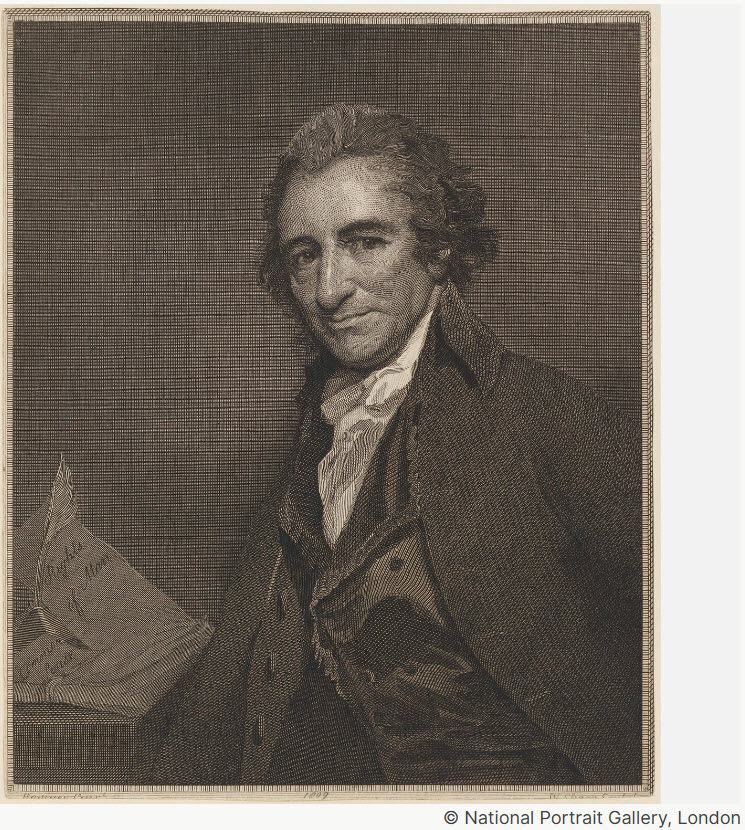
Thomas Paine saw what happens when it doesn't hold. "The strength and powers of despotism consist wholly in the fear of resisting it." Tyrants are not inherently powerful. They rise when the people lose their footing: when there is nothing fixed to stand on.
The Preamble to the Constitution was always the soul of the document. It named the mission clearly: six goals the founders authorized as this government's sole legitimate purpose. But that mission was left as an aspiration, unenforceable, unprotected, and ultimately ignored.
That is the founding flaw. Not in the people who built this country, but in the assumption that the mission would enforce itself. Click here for more details: https://michaelclongo.substack.com/p/the-founding-flaw?r=g3rt2
For generations, the people have fought back: with anger, with movements, with elections, but always at the symptoms, never at the root. Because the root was never named.
We are naming it now.
The First Principle Party exists to close that gap. To set the Preamble's mission in stone, as it was always meant to be. To make the founders' stated goals the binding standard for every law, every policy, every act of government.
We built a framework to hold that standard. It begins with the Trinity Balance: seeking wholeness before judgment. It ends with the Preamble's measure: six goals, clearly stated, finally enforced.
And no false agenda can pass through both undetected.
That is not a promise. That is our design - and it is how we restore our nation.
What is the Nation’s First Principle?
The United States has already answered this question. It was answered before a single law was written, before a single branch of government was formed, before a single court was seated.
It is written in the Preamble.
To form a more perfect union. To establish justice. To ensure domestic tranquility. To provide for the common defense. To promote the general welfare. And to secure the blessings of liberty.
These are not suggestions. They are not aspirations. They are the stated reason the Constitution was written at all. Every clause, every amendment, every article inside that document exists to serve these six goals, and no other purpose.
This is not a new interpretation. It is the only honest one.
Any law that cannot be measured against these six goals and found worthy is not governing; it is drifting. Any policy that serves something other than these six goals is not leadership; it is betrayal.
The lawyers will tell you the Preamble is aspirational. We ask them one question:
If that is true, what exactly did the founders intend the Constitution to achieve?
There is no clean answer. And in that silence is why this new party is needed. The Preamble already answered it, but it has been systematically ignored.
We exist to end the drift. To hold every action of government to the only standard it was ever authorized to meet.
The one the founders wrote down before they wrote anything else.


A First Principle in Action: What Are We Actually Eating?
The Secretary of Health and Human Services recently made a statement that should have stopped every American cold:
The FDA does not know how many ingredients are in American food.
Not a conspiracy theory. Not an opinion. A statement made on national television by the man whose job it is to know.
Here is what we do know: over 10,000 chemical additives are currently present in processed foods. Three thousand of them have never been reviewed by the FDA. One thousand were declared safe by the very manufacturers who profit from using them.
This is not governance. This is abandonment.
So let us apply the First Principle method.
Step 1 — Define the Truth: What is actually in our food supply? Who approved it? Who reviewed the safety data? Who benefits financially from its use? These are not complicated questions. They have been deliberately left unanswered.
Step 2 — Trace the Cause: How did 10,000 unreviewed chemicals end up in our food? Through a regulatory loophole called GRAS: Generally Recognized as Safe, which allows manufacturers to certify their own ingredients without FDA approval or public disclosure. The fox was handed the keys to the henhouse and told to write his own inspection report.
Step 3 — Measure Against the Preamble: Does a food supply loaded with untested chemicals, causing documented rises in chronic illness, childhood behavioral disorders, cancer, and obesity, promote the general welfare? Does it secure the blessings of liberty for our children and their children?
The answer is no. Which means it fails the only standard that matters.
Step 4 — Correct the Misalignment: Every chemical additive must be independently reviewed. Safety data must be public. No manufacturer self-certifies safety for profit. Communities and citizens are part of the review process; their feedback is not optional- it is required.
Step 5 — Hold the Line: Approval is not permanent. Ongoing public reporting. Measurable health outcomes. Reassessment when evidence demands it. The people stay in the loop, not as a courtesy, but as a right.
This is how the First Principle Party governs. The subject changes. The method does not. And the standard is always the one the founders wrote down before they wrote anything else. Click here for more details: https://michaelclongo.substack.com/p/how-the-first-principle-party-proposes?r=g3rt2
Does it serve the people? If not, it does not stand.
Thus, the First Principle Party Platform is this:
To apply First Principle thinking to every issue this nation faces, with complete transparency, and with the public in the room at every step, uncovering the driving forces actually at play, measuring every decision against the six goals of the Preamble, and following the truth wherever it leads, regardless of party, donor, or ideology.
No exceptions. No substitutions. No drift.
The people authorized one mission. We intend to honor it.
Click here for more details: https://michaelclongo.substack.com/p/the-double-filter?r=g3rt2
A Note on Candidate Standards
The First Principle Party does not simply endorse candidates — it certifies them.
Any candidate seeking to run under our banner or receive our support must demonstrate a working understanding of first principles thinking and the Trinity Balance framework. This is accomplished through a structured evaluation process designed to assess whether a candidate can analyze issues from first principles, free from ideological bias, and measure proposed solutions honestly against the Preamble's six goals.
This is not a loyalty test. It is a competency standard — the same standard we intend to apply to every law and policy through the Government Preamble Compliance Number.
We believe the public deserves representatives who can think clearly, not just speak persuasively. The certification process is how we ensure that.
Candidates interested in seeking our support may contact us through the Contact page.
What Living with the Preamble Goals in Place Actually Looks Like
Every party promises change. Few ever describe what they are changing toward. We will. If this mission succeeds. If the Preamble becomes the living standard by which every law, every policy, and every action of government is measured and held, this is what life in the United States begins to look like. Not as a political outcome. As a human experience. These are not promises. They are destinations. Described plainly, so that every person reading them can feel whether they are worth fighting for. We believe they are. We believe you will too.
What It Looks Like To Live the Preamble
The founders did not write these six goals for governments. They wrote them for people. This is what life looks like when they are honored. Click here for more details: https://michaelclongo.substack.com/p/imagine-our-nation-living-the-preamble?r=g3rt2&utm_campaign=post&utm_medium=web&showWelcomeOnShare=true
1. A More Perfect Union
This is the state where conflict between people has been reduced: not to silence, but to something better. What remains is playful engagement, genuine cooperation, and the shared joy of helping one another reach their goals.
Different opinions still exist. They always will. But they are settled through mature, honest debate, where the process of finding the truth is honored above the need to win. Life is grounded in facts that support living, not opinions that divide it.
The founders did not call for a perfect union because perfection is a destination we cannot reach or agree upon. A more perfect union is wiser than that. It acknowledges that growth never ends, that society can always become more gentle, more just, more alive to the dignity of all living things, not merely human to human.
There is always room to grow. And we are always growing into it.
2. To Establish Justice
This is the state where no injustice is tolerated anywhere in civil life: not because it is suppressed, but because the conditions that produce it have been addressed at their root.
Control of one person or of a people over another simply does not exist in a fully realized justice society. Every individual stands equal before the truth: not equal in outcome, but equal in dignity, equal in protection, and equal in the eyes of whatever process is used to resolve what is fair.
Justice is not a courtroom. It is a daily experience: the quiet, unspoken confidence that if something goes wrong, something honest will respond. That no name, no wealth, and no connection can purchase an outcome that the truth would not support.
When that confidence lives in a people, justice is alive. When it is gone, only procedure remains.
3. Domestic Tranquility
This is a state of calm and peace: not the calm of suppression, but the calm of coherence. It arises naturally when a more perfect union is realized and a just society takes root.
Tranquility is felt the way a well-running engine is felt, by not being felt at all. When your car is running perfectly, you do not think about the engine. It hums in the background of your awareness, steady and trustworthy, giving you the freedom to simply drive.
That is what government at its best feels like. It works. It serves. It remains in the background of daily life, so steady, so competent, so quietly dedicated to its mission that the people it serves are free to live without worry, without outrage, and without the daily exhaustion of wondering whose interests are actually being served.
Tranquility is what trust feels like when it has been earned and kept.
4. The Common Defense
This is the state of a nation strong enough that no foreign force, whether by arms, subversion, manipulation, or coercion, can redirect its course against the will of its people.
That strength is real. It is authorized. It is a cornerstone of what we built, and we built it deliberately, because a nation with something worth protecting must be able to protect it.
But note what we authorized and what we did not.
We authorized defense. We did not authorize offense. We did not authorize the projection of force into the affairs of other nations for interests we were never asked to serve. A nation that leads with wisdom, justice, and the genuine welfare of its people becomes something the world does not wish to harm: the way a good neighbor never raises a hand against a friend.
Our greatest defense has always been what we stand for. The strength exists to protect that standing, nothing more, and nothing less.
5. The General Welfare
This is the state of trust: deep, earned, and unshakeable, that everything the government touches is done for the well-being of the people.
In this state, you breathe without worry because the air is clean. You drink without fear because the water is pure. You eat without doubt because the food is safe. You do not need to research whether your government is working against you, because it isn't, and you know it isn't, and that knowledge frees an enormous amount of human energy for living.
From that foundation of trust, welfare grows. A people that is healthy, fed, educated, and genuinely cared for does not merely survive: it thrives. And a nation of thriving people becomes a quiet beacon to the world, not through force or persuasion, but through the simple, undeniable evidence of what is possible when government does its actual job.
General welfare is not a program. It is a promise kept: every day, in everything the government does.
6. The Blessings of Liberty: For Ourselves and Our Posterity
This is the state of knowing: not hoping, not wishing, but knowing that as time moves forward, we are growing. In wisdom. In values. In wealth of every kind that matters.
Liberty in this state is not merely the absence of oppression. It is the active, living experience of being the author of your own life, free to build, to speak, to believe, to create, and to pass what you have built to those who come after you.
And when someone falls, as people will, because life includes falling, another reaches down and lifts them back. Not out of obligation. Out of the natural generosity of a people who know they are secure enough to give.
That is how liberty is secured and held. Not by force. Not by walls. But by a people so rooted in justice, so at peace in their union, so trusting of their government's purpose, that the blessings they carry forward to their children are greater than the ones they inherited.
Posterity is not an abstract word. It is every child not yet born who will inherit either a nation that honored this mission or one that abandoned it.
We are the generation that decides which one they receive.