
How We Apply First Principles
Here, the First Principle Party examines real issues using our two-step evaluation process: identifying the first principles at work in any problem, then measuring proposed solutions against the six goals the founders authorized as the only legitimate mission of this government.
Our goal is not endless political conflict. Our goal is to restore alignment between government action and the Preamble's six purposes, and to demonstrate publicly, transparently, and consistently how we measure that alignment.
The examples on this page show the process in action. The subject changes. The method does not. And the standard is always the same: does this serve the people who authorized it?
For a full explanation of how the evaluation framework works, visit our Complaint Department page. To see the growing record of evaluations already completed, visit Complaints Filed.
1. War With Iran
The Issue: The United States is once again moving toward military conflict in the Middle East. Trillions spent. Thousands of lives lost. Regions have been destabilized for decades. And the question that should have been asked first is rarely asked.
The First Principle Question: Does this action serve the Preamble's mandate to provide for the common defense, promote the general welfare, and secure the blessings of liberty for Americans?
What Must Be Examined
· Is there a direct and verifiable threat to the American people, not a regional interest, not an ally's conflict - ours?
· What is the clearly stated and measurable objective?
· What are the full financial and human costs, and who bears them?
· Could this action destabilize the economy or expand the conflict beyond its stated scope?
· Have the American people been fully and honestly informed before a single dollar is spent or a single life is committed?
Our Conclusion: Defense of this nation is sacred. It is one of the six purposes government was created to fulfill.
But defense of this nation is not the same as military presence everywhere. It is not the same as regime change. It is not the same as protecting interests the people never authorized.
War is the most irreversible decision a government can make. It must meet the highest standard of alignment with the Preamble, not the lowest threshold of political convenience.
If it cannot be proven to serve the American people first, it cannot be authorized in their name.
Note: A full first-principles evaluation of the current Iran conflict using our two-step FP Factor and GPCN framework is available on the Complaints Filed page.
2. Government Serving Itself Over the People
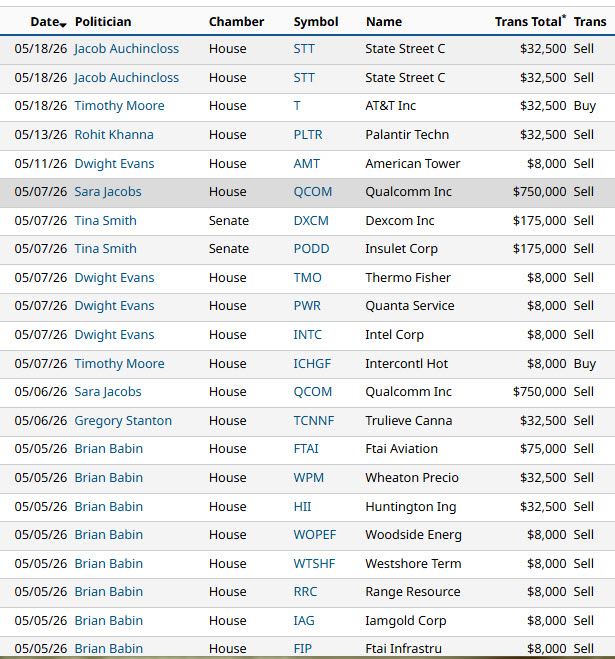
The Issue: Something has gone quietly and profoundly wrong in Washington. The people sent to represent us have, in alarming numbers, used that position to enrich themselves, while the people who sent them struggle to pay their bills, afford healthcare, and secure a future for their children.
This is not speculation. It is a pattern, documented, repeated, and largely legal because the people benefiting from it write the rules.
The First Principle Question: Does a government that enriches itself at the public's expense fulfill the Preamble's mandate to promote the general welfare, establish justice, and secure the blessings of liberty?
What Must Be Examined
· Members of Congress legally trade stocks using information unavailable to the public, and have repeatedly blocked legislation that would stop it. How is that justice?
· Career politicians arrive in office middle-class and leave as millionaires, on a government salary. How is that possible without explanation?
· Lobbyists representing corporations and foreign interests write legislation that elected officials then sign. Who is actually governing?
· The revolving door between regulatory agencies and the industries they oversee has made oversight nearly fictional. Who is watching whom?
· Foreign aid is distributed by the billions to nations around the world while veterans sleep on streets, infrastructure crumbles, and American families choose between medication and food. By what Preamble goal is that justified?
· DOGE promised $2 trillion in savings from waste and abuse. Total federal spending increased by 6%. The waste was real. The accountability was not.
Our Conclusion: A government that serves itself is not a government that has drifted from its mission.
It is a government that has reversed it.
The Preamble does not say government exists to provide comfort for those elected to run it. It does not authorize enriching officials at the expense of the people they were sent to serve. It does not permit those with the deepest pockets to buy legislation.
It authorizes one thing: service to the people. All six goals point in one direction, toward the citizen, not the official.
Some in office have held that line, refused the machine, rejected the rewards, and paid a price for it. They exist. They are rare. And they are exactly who this party intends to stand behind and multiply.
The rest have some explaining to do, and for the first time, a standard to meet. Click here for more details: https://michaelclongo.substack.com/p/the-psychology-of-institutional-drift?r=g3rt2
A full first-principles evaluation of Government serving itself over people using our two-step FP Factor and GPCN framework is available on the Complaints Filed page.
3. Unvetted Mass Immigration
The Issue: Over recent years, millions of migrants entered the country under policies that changed dramatically from one administration to the next. One administration opened the door with minimal vetting, placing financial and logistical strain on cities, schools, healthcare systems, and public resources. The next sharply reversed course, with mass deportations, rapidly shifting enforcement, and policies that left both citizens and migrants without a clear or stable framework to rely on.
The result was not security. It was not justice. It was chaos, administered by two different governments, in two different directions, at the expense of the same people.
The First Principle Question: Does immigration policy that swings wildly between administrations, destabilizing communities, straining public systems, and leaving millions of people without clear expectations or humane treatment, align with the Preamble goals of ensuring domestic tranquility, establishing justice, and promoting the general welfare?
What Must Be Examined
· Were immigration policies implemented in a way that allowed communities and public systems to remain stable and sustainable, or were cities left to absorb consequences they were never consulted about?
· Were citizens fully informed about the financial, logistical, and social impact before policies were enacted, or informed only when the strain became impossible to ignore?
· Did rapid and dramatic policy reversals between administrations increase public distrust and national division, and who paid the price for that instability?
· Were migrants themselves given a clear, consistent, and humane understanding of expectations, responsibilities, and long-term outcomes, or were they used as political instruments by both sides?
· Did the strain placed on housing, healthcare, education, and public services compromise the government's ability to promote the general welfare of the citizens already here?
· Has any administration ever applied a consistent, transparent, and sustainable standard to immigration, or has it always been a political weapon, swung left then right, with the American people absorbing the impact either way?
What The First Principle Standard Reveals: Both approaches failed the Preamble test.
Unchecked entry without vetting or community preparation did not promote the general welfare or ensure domestic tranquility. It transferred the burden of a federal policy decision onto local communities without their consent.
Mass deportation without a clear, consistent, and humane legal framework did not establish justice. It created fear, instability, and a different kind of disorder, one that raised its own legitimate humanitarian questions.
Neither administration asked the right question first. Neither measured its policy against the only standard that was ever authorized.
Our Conclusion: Immigration is not an unsolvable problem. It is an unasked question, finally asked honestly.
A first-principles immigration policy is transparent, consistent, humane, and sustainable across administrations. It does not change with the political winds. It is built on one foundation: does this policy serve domestic tranquility, establish justice, and promote the general welfare, for citizens and for those seeking entry alike?
If it does not meet that standard, it does not move forward, regardless of which party proposes it.
Immigration has been a political weapon for decades. It is time it became a policy, measured, consistent, and answerable to the people it affects.
A full first-principles evaluation of Unvetted Immigration using our two-step FP Factor and GPCN framework is available on the Complaints Filed page.
4. Healthcare Pricing Transparency
The Issue: You walk into a hospital. You receive care. You go home.
Weeks later, an invoice arrives that bears no resemblance to anything you were told, or weren't told, before you were treated. You call to understand it. Nobody can explain it. You call your insurance company. They explain something different. You call again. The number changes.
This is not an accident. It is a system, built layer by layer, over decades, by the very industries that profit from your confusion.
And it is happening to nearly every American family.
The First Principle Question: Does a healthcare system in which ordinary citizens cannot determine the cost of essential care before receiving it, and cannot understand their bill after, align with the Preamble goals of promoting the general welfare and securing the blessings of liberty?
What Must Be Examined
· Why does the same medical procedure cost $800 at one facility and $5,400 at another, and why is that information nearly impossible to find before you need it? Who benefits from that opacity?
· Why do insurance policies require advanced degrees to interpret, and why are the people who need care most often the least equipped to navigate them?
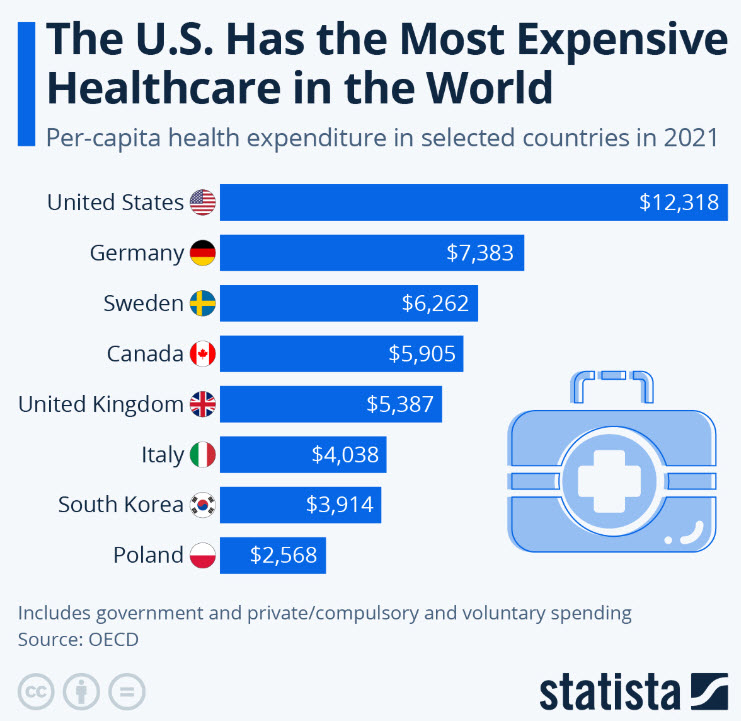
· Why do pharmaceutical companies charge Americans multiples of what the same drug costs in other countries, for drugs often developed with American taxpayer funding?
· Why do surprise bills arrive weeks after treatment for services the patient never knowingly consented to pay for?
· Why has a system built around the general welfare of the American people become one of the leading causes of personal bankruptcy in the wealthiest nation on earth?
· And why, after decades of political promises to fix it, does nothing change, except the profits of those who benefit from keeping it broken?
What The First Principle Standard Reveals: A citizen who cannot understand the cost of their own healthcare is not a patient being served. They are being processed as a revenue source.
That is not general welfare. That is not justice. That is not the blessing of liberty that the founders authorized the government to protect.
The complexity is not inevitable. The same lobbying apparatus we identified in issue number two engineered and maintains it. The healthcare system and the government that was supposed to regulate it have been captured by the same revolving door. Click here for more details: https://michaelclongo.substack.com/p/welfare-requires-agency?r=g3rt2
Our Conclusion: Healthcare pricing must be transparent, standardized, and publicly visible before services are rendered - no exceptions.
Insurance policies must be written in plain language that any citizen can understand without legal or financial expertise.
Pharmaceutical pricing must be accountable to the public that funds the research behind it.
And no American should face financial ruin for the crime of getting sick.
This is not a radical position. It is what the general welfare actually means, applied honestly, for the first time, to a system that has never been held to that standard.
The system is not broken. It is working exactly as the people who built it intended. That is the problem, and that is what changes. Click here for more details: https://michaelclongo.substack.com/p/healthcare-costs-and-the-general?r=g3rt2
A full first-principles evaluation of HealthCare Transparency and Pricing using our two-step FP Factor and GPCN framework is available on the Complaints Filed page.
5. National Debt and Government Spending
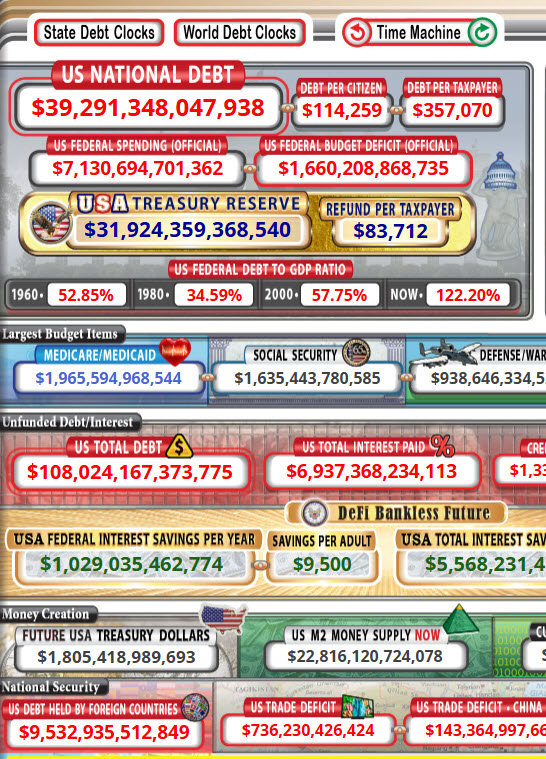
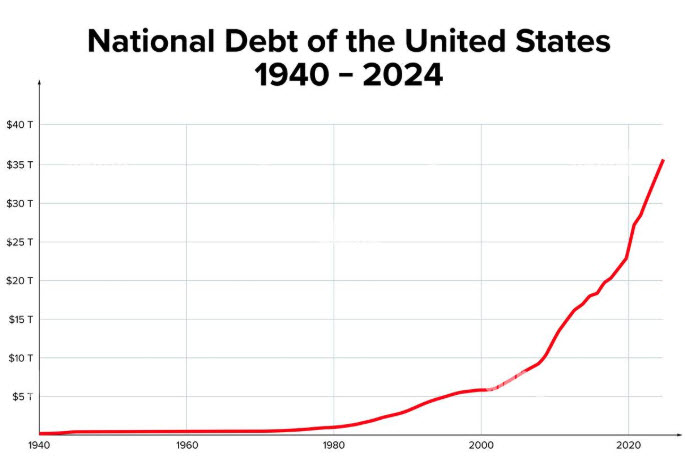
The Issue: The United States currently carries more than $39 trillion in national debt. It grows by approximately $1 trillion every 100 days. It is the largest debt ever accumulated by any government in human history, and it is being added to, without pause, by every administration regardless of party, regardless of promise, and regardless of consequence to the people whose name it is borrowed in.
DOGE was launched with a promise to cut $2 trillion in waste, fraud and abuse. Total federal spending increased by 6%. The waste was real. The accountability was not.
This is not mismanagement. It is a pattern, and patterns have causes.
The First Principle Question: Does a government that borrows trillions beyond its means — funding programs, foreign aid, and interests never authorized by the people- fulfill the Preamble goals of promoting the general welfare, ensuring domestic tranquility, and securing the blessings of liberty to ourselves and our posterity?
What Must Be Examined
· The federal government currently sends hundreds of billions in foreign aid annually to nations around the world while veterans sleep on streets, bridges crumble, and American families choose between groceries and medication. Which Preamble goal is that prioritized over the people who funded it?
· Congress has not passed a complete, on-time federal budget in decades, governing instead through emergency continuing resolutions that bypass normal oversight. Who authorized that as acceptable?
· Lobbying interests, defense contractors, and corporate recipients of government spending invest heavily in the campaigns of the officials who approve that spending. Is that a budget process or a transaction?
· The Federal Reserve expands the money supply through bond purchases, effectively financing government debt in ways that erode the purchasing power of ordinary Americans' savings, inflating the currency. This is like taxing the public through the back door without a single vote. Was that authorized by the people?
· Every dollar borrowed today is a debt handed to the next generation without their consent. Does that secure the blessings of liberty to our posterity, or steal from them before they are old enough to object?
· And if a government cannot balance its own books, by what authority does it claim to manage the welfare of an entire nation?
What The First Principle Standard Reveals: The national debt is not a financial problem. It is a Preamble problem.
It is what happens when government stops measuring its decisions against its mission and starts measuring them against what it can get away with. When spending serves donors, foreign interests, and political survival instead of the six goals the founders authorized, debt is not a side effect. It is the evidence.
A government that cannot live within the means its citizens provide has not drifted from its mission.
It has abandoned it.
Our Conclusion Every dollar of federal spending must be measured against the six goals of the Preamble, not against political priorities, not against the requests of lobbyists, and not against the interests of foreign nations before our own.
Foreign aid must be evaluated by the same standard: does it serve the general welfare, the common defense, and the domestic tranquility of the American people? If it cannot meet that standard it cannot be funded at the expense of the people who were never asked.
A balanced budget is not an aspiration. It is what responsible stewardship of the public trust looks like, and it is long overdue.
The debt belongs to all of us. The accountability belongs to them.
It is time those two things were reconciled, with our kind of attention.
Click here for more details:
https://michaelclongo.substack.com/p/work-product-of-the-people?r=g3rt2
A full first-principles evaluation of National Debt and Government Spending using our two-step FP Factor and GPCN framework is available on the Complaints Filed page.
What These Five Examples Prove
Five different issues. Five different causes. Five different sets of consequences.
One method. One standard. One question asked every time:
Does this serve the people the government was created to serve?
Washington has not asked that question consistently in living memory. These examples show what happens when it isn't, and what becomes possible when it is.
This is not the complete list of issues this nation faces. It demonstrates that no issue is too complex, too political, or too entrenched to be examined honestly and resolved with clarity, when the right standard is applied by people with the courage to apply it.
The First Principle Party exists to apply that standard — without exception, by people answerable to the Preamble and nothing else.
These five examples are the beginning. Add yours on the Complaint Department page.
The method is proven. The mission is clear. What remains is the will to act, and the people willing to act on it.












Our Commitment
The First Principle Party believes government must remain aligned with the mission written in the Preamble.
We are seeking principled citizens willing to serve in public office and help restore transparency, accountability, and balance in government.
These issues will not correct themselves.
They require citizens willing to stand on principle and act.