
Name a problem
We invite you to test us.
Name any problem our federal government has failed to solve, and we will show you exactly how making the Preamble binding changes the answer.
This is not a debate. It is a demonstration.
Submit your named problem using the form below. We will post it here alongside our First Principle response, openly, honestly, and without spin, so anyone can follow the reasoning and judge for themselves.
Over time, this page will become a living record of what First Principle governance actually looks like in practice. One problem at a time. One honest answer at a time.
That is how trust gets built. Submit yours below.
Your email address will not be shared or stored unless you choose to join us for updates. Together, we can make the changes to our government that we want to see.
How We Analyze Every Problem
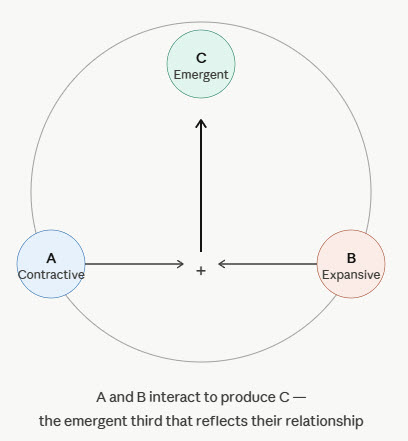
Every problem submitted here is examined through the same first principle formula derived from the Trinity Balance in Reality: a framework revealing that all of reality organizes itself through one repeating law: two complementary, opposing parts, one contractive, one expansive, interact to produce an emergent third that unifies them into a whole.
This is not a political invention. It is the structural grammar of existence itself, observable from the atom to the cosmos, from a conversation between two people to the governance of a nation. Every living system, every enduring structure, every lasting relationship operates through this same law.
When you understand it, something remarkable happens. Confusion begins to fall away. Opinion loses its grip. The underlying forces driving any situation become visible, and what needs to change becomes clear.
Applied to governance, it works like this:
A — The Preamble: The contractive center. The measuring standard. The mission the government was authorized to fulfill, existing in time through words like "establish," "ensure," "promote," and "provide." This is always our starting point, never opinion, never ideology, never party loyalty.
B — The Policy or Issue: The expansive element. The proposed action, law, or situation moving into space, being examined honestly against A.
C — The Outcome: The energy produced by their interaction. What the policy actually creates for the people it affects. C never lies. It always tells the truth about whether B is genuinely aligned with A, or whether something else entirely is being served.
You can apply this formula yourself to any problem you face, personal, political, or societal. Start with what is undeniably true. Measure everything against it. Follow where the facts lead, regardless of where they take you.
That is first principle thinking. That is the grammar of reality applied to the problems of our time. That is rational thought as a daily practice rather than a rare exception.
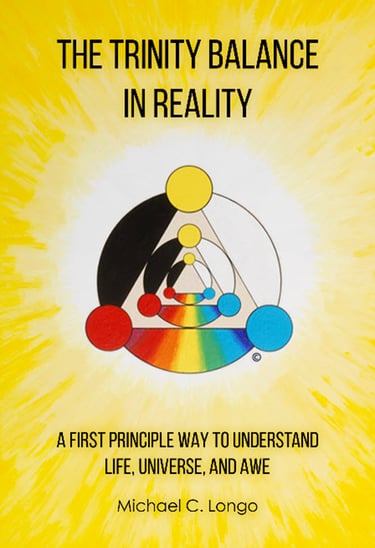
To explore the full framework that underlies this method, The Trinity Balance in Reality is available on at 3hbalancebooks.com or on Amazon https://www.amazon.com/Trinity-Balance-Reality-Principle-Understand-ebook/dp/B0G6N32CRS/ref=sr_1_1?crid=1IG3MGTGPFGSG&dib=eyJ2IjoiMSJ9.NP4XV4j4Gn2x66wHqXwJUZgP3U6PBqnQqkM_iBUf7H8Dx_BjRqYNtr4PmGERlWnKvgh5DvtOrLdxP7vypFsOJJYA69UWrBIMX9N9TEpESIk.X2kk_e7UhGJb0O9x_qKS-y0ovRdSiIx4jq2uEbKs8DE&dib_tag=se&keywords=the+trinity+balance+in+reality&qid=1780336961&sprefix=the+trinity+balance+in+reality%2Caps%2C223&sr=8-1
Ready to challenge us? Use the Name Your Problem form below and watch it work.
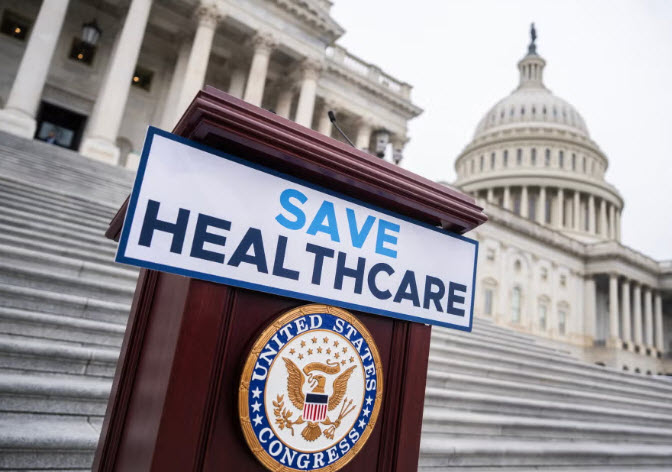
Submitted by Kristina: How can Congress people get free or low-cost health care that is miles better than the public? This is unfair, and aren't there rules on the books against it?
The Problem: Members of Congress receive heavily subsidized premium healthcare unavailable to the general public, paid for by the same taxpayers who cannot afford equivalent coverage.
The Preamble Test:
Does this promote the general welfare? No! It creates a two-tier system where those who legislate healthcare policy are insulated from its consequences. Representatives who never face a surprise medical bill, a coverage denial, or a choice between medication and rent have no personal incentive to fix the system for those who do.
Does it establish justice? No! Equal protection under the law is a foundational principle of justice. A governing class with superior benefits paid for by those they govern is not justice. It is privilege institutionalized.
Does it secure the blessings of liberty? No! Liberty includes freedom from a ruling class that exempts itself from the rules it imposes on others.
The First Principle Answer: Every benefit, compensation package, and healthcare plan available to members of Congress must be identical to what is available to the citizens they represent. No exceptions. If the system is good enough to legislate for the public, it is good enough to live under themselves.
Submitted by James: How can the preamble stop an administration from pardoning a donor for his crimes and then say he does not have to make his victims whole? How can the preamble stop that level of injustice? This is simply outrageous and makes my blood boil!
The Problem: A convicted fraudster, Trevor Milton, who defrauded investors of hundreds of millions of dollars, received a presidential pardon five months after donating nearly a million dollars to the pardoning president's campaign. The court-ordered restitution to victims was wiped out along with the conviction.
The Preamble Test:
Does this establish justice? No! Justice means the law applies equally regardless of wealth, political connection, or campaign contribution. When a pardon follows a donation with that kind of timing and amount, the appearance of purchased justice is impossible to separate from justice itself. The victims who lost their money have no recourse. That is the opposite of justice.
Does it promote the general welfare? No! When investors cannot trust that securities fraud will be prosecuted and that sentences will be served, markets become less safe for ordinary citizens while the well-connected operate without consequence.
Does it ensure domestic tranquility? No! Nothing erodes public trust in government faster than visible evidence that the legal system has a price.
The First Principle Answer: The pardon power exists to correct genuine injustice, not to reward political donors or nullify court-ordered restitution to fraud victims. Any exercise of executive power, including pardons, must be measurable against the Preamble's six goals. A pardon that wipes out victim restitution while leaving donors unpunished fails every relevant standard.
The investors who lost their money deserved better. The Preamble says so.