How we solve problems using our purpose-made evaluation means and how to file your complaints about how the U.S. Government is not performing well.
First Principle Party Evaluation methodology example
Policy: The Trump Dividend — $5,000 payment to every adult American citizen conditional on Republicans retaining control of the House and Senate in the 2026 midterm elections.
Step One — FP Factor
First principles at work:
Cause and Effect — Conditioning a financial payment on an electoral outcome creates a direct causal link between voting behavior and personal financial gain. This is the structural mechanism the policy operates on.
Incentive structures shape behavior — A fundamental first principle of human behavior is that people respond to incentives. A $1 trillion conditional payment creates a documented incentive to vote for a specific party regardless of policy merit.
Conflict of interest — When the decision maker benefits from a specific outcome, the integrity of the decision is structurally compromised. A president offering financial rewards conditional on his party winning creates a documented conflict between public interest and partisan interest.
FP Factor: 3 first principles identified — all working against sound governance structure.
Step Two — GPCN
1. Form a more perfect union: -80
Conditioning a national payment on partisan electoral victory explicitly divides the nation into winners and losers based on party affiliation. It deepens partisan identity rather than reducing it. The documented cost exceeds $1 trillion, further straining national finances. This is among the most direct possible violations of the union goal.
2. Establish justice: -70
Using public funds — collected from all Americans regardless of party — to incentivize votes for one party is documented as potentially illegal under existing election law. It treats citizens unequally based on their voting behavior and places the power of the public treasury in service of partisan advantage rather than equal justice.
3. Ensure domestic tranquility: -60
A conditional payment creates documented anxiety and division — those who support the opposing party experience it as coercion, those who support the president's party experience it as validation. The social tension this produces is the opposite of tranquility. The proposal also generated immediate legal and constitutional controversy adding to national instability.
4. Provide for the common defense: -20
No direct connection to defense, though a $1 trillion addition to an already documented $1.8 trillion annual deficit weakens the nation's long term fiscal capacity to fund genuine defense needs.
5. Promote the general welfare: -65
The payment is conditional on a partisan outcome rather than on any demonstrated welfare need. It would add over $1 trillion to the national debt, documented as already at crisis levels, which harms the general welfare of future generations. The proposal was walked back within hours by the Vice President suggesting it was not a genuine welfare policy but a political gambit.
6. Liberty achieved — average of first five: -59
Overall GPCN Score: -59
Determination: FAIL
The Trump Dividend proposal fails every Preamble goal simultaneously. Three identified first principles are all operating against sound governance. The conditional structure explicitly links public funds to partisan electoral outcomes, which is documented as potentially illegal, fiscally irresponsible, and directly contrary to the union, justice, tranquility, and general welfare goals the Preamble authorizes.
This is not a judgment about the Republican Party or the Trump administration as a whole. It is a first principles evaluation of one specific proposal measured against the only standard the American people have ever authorized their government to serve.
GPCN: -59 | FP Factor: 3 principles identified, all working against mission alignment | DETERMINATION: FAIL
Submit your complaint and help us build a database
This database is designed to be a living hub where you can see our evaluation process at work on real complaints from real people. We don't know all the problems, so we need your help. Send in a 20-second video clip of you stating your complaint and we will log it here and run the numbers on it — identifying the first principles at work and scoring it against the Preamble's six goals.
I will also collect complaints from people I meet in public and add those here too.
Our hope is that this page and the database page here: https://thefirstprincipleparty.com/complaints-filed becomes a teaching tool as much as a complaint log — showing you how to think in first principles about any problem and how its solution aligns with the only mission the American people ever authorized their government to serve.
Use the form below to file your complaint. I will reply with the link to send your video clip if you want to make one.
A living complaint department beats a static one every time.
The philosophical foundation of our evaluation method
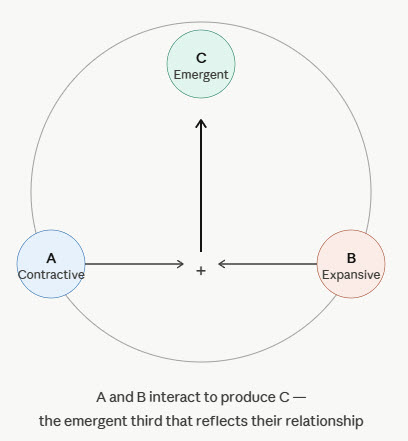
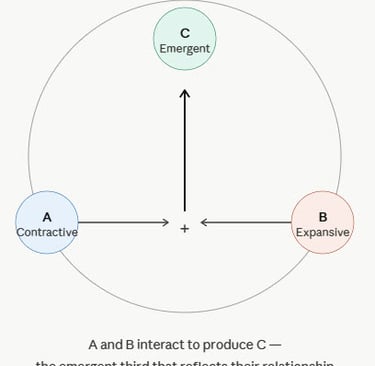
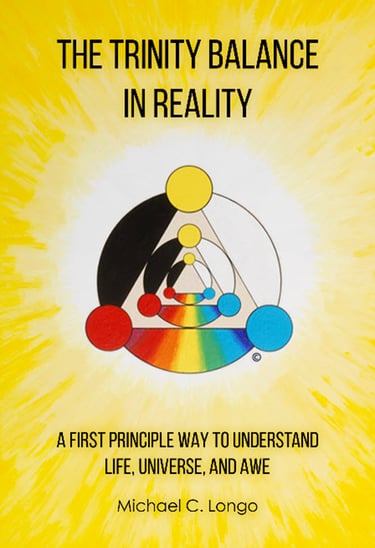
Every problem submitted here is examined through the same first-principle formula derived from the Trinity Balance in Reality: a framework revealing that all of reality organizes itself through one repeating law: two complementary, opposing parts, one contractive, one expansive, interact to produce an emergent third that unifies them into a whole.
This is not a political invention. It is the structural grammar of existence itself, observable from the atom to the cosmos, from a conversation between two people to the governance of a nation. Every living system, every enduring structure, every lasting relationship operates through this same law.
When you understand it, something remarkable happens. Confusion begins to fall away. Opinion loses its grip. The underlying forces driving any situation become visible, and what needs to change becomes clear.
Applied to governance, it works like this:
A — The Preamble: The contractive center. The measuring standard. The mission the government was authorized to fulfill, existing in time through words like "establish," "ensure," "promote," and "provide." This is always our starting point, never opinion, never ideology, never party loyalty.
B — The Policy or Issue: The expansive element. The proposed action, law, or situation moving into space, being examined honestly against A.
C — The Outcome: The energy produced by their interaction. What the policy actually creates for the people it affects. C never lies. It always tells the truth about whether B is genuinely aligned with A, or whether something else entirely is being served.
You can apply this formula yourself to any problem you face, personal, political, or societal. Start with what is undeniably true. Measure everything against it. Follow where the facts lead, regardless of where they take you.
That is first principle thinking. That is the grammar of reality applied to the problems of our time. That is rational thought as a daily practice rather than a rare exception.
To explore the full framework that underlies this method, The Trinity Balance in Reality is linked to maxon on our Bill, call to action page here:
https://thefirstprincipleparty.com/the-bill-our-founding-solution-call-to-action
Ready to challenge us? Use the Name Your Problem form below and watch it work.
How We Analyze Every Problem
First Principle Party Evaluation methodology example
Policy: The Trump Dividend — $5,000 payment to every adult American citizen conditional on Republicans retaining control of the House and Senate in the 2026 midterm elections.
Step One — FP Factor
First principles at work:
Cause and Effect — Conditioning a financial payment on an electoral outcome creates a direct causal link between voting behavior and personal financial gain. This is the structural mechanism the policy operates on.
Incentive structures shape behavior — A fundamental first principle of human behavior is that people respond to incentives. A $1 trillion conditional payment creates a documented incentive to vote for a specific party regardless of policy merit.
Conflict of interest — When the decision maker benefits from a specific outcome, the integrity of the decision is structurally compromised. A president offering financial rewards conditional on his party winning creates a documented conflict between public interest and partisan interest.
FP Factor: 3 first principles identified — all working against sound governance structure.
Step Two — GPCN
1. Form a more perfect union: -80
Conditioning a national payment on partisan electoral victory explicitly divides the nation into winners and losers based on party affiliation. It deepens partisan identity rather than reducing it. The documented cost exceeds $1 trillion, further straining national finances. This is among the most direct possible violations of the union goal.
2. Establish justice: -70
Using public funds — collected from all Americans regardless of party — to incentivize votes for one party is documented as potentially illegal under existing election law. It treats citizens unequally based on their voting behavior and places the power of the public treasury in service of partisan advantage rather than equal justice.
3. Ensure domestic tranquility: -60
A conditional payment creates documented anxiety and division — those who support the opposing party experience it as coercion, those who support the president's party experience it as validation. The social tension this produces is the opposite of tranquility. The proposal also generated immediate legal and constitutional controversy adding to national instability.
4. Provide for the common defense: -20
No direct connection to defense, though a $1 trillion addition to an already documented $1.8 trillion annual deficit weakens the nation's long term fiscal capacity to fund genuine defense needs.
5. Promote the general welfare: -65
The payment is conditional on a partisan outcome rather than on any demonstrated welfare need. It would add over $1 trillion to the national debt, documented as already at crisis levels, which harms the general welfare of future generations. The proposal was walked back within hours by the Vice President suggesting it was not a genuine welfare policy but a political gambit.
6. Liberty achieved — average of first five: -59
Overall GPCN Score: -59
Determination: FAIL
The Trump Dividend proposal fails every Preamble goal simultaneously. Three identified first principles are all operating against sound governance. The conditional structure explicitly links public funds to partisan electoral outcomes, which is documented as potentially illegal, fiscally irresponsible, and directly contrary to the union, justice, tranquility, and general welfare goals the Preamble authorizes.
This is not a judgment about the Republican Party or the Trump administration as a whole. It is a first principles evaluation of one specific proposal measured against the only standard the American people have ever authorized their government to serve.
GPCN: -59 | FP Factor: 3 principles identified, all working against mission alignment | DETERMINATION: FAIL